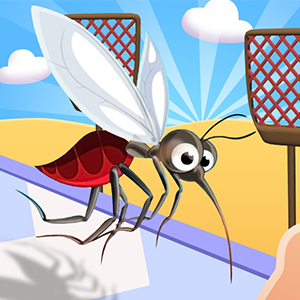
Bite when the cue drops
A two-beat speed-run: in while the window is quiet, bite once, out on the same line before the cue flips. The whole clear is one commit and one retreat, so a fast run is a short run, and time is lost only by lingering to confirm.
Watch one full cycle before moving at all
Two beats: in, bite, and out the same line
Move in only while the warning indicator is down, bite once, and reverse on the same line. Never linger to confirm the bite, because the confirm can be read while you are already retreating, which is what makes the clear one smooth beat.
The fastest clear never waits for confirmation
Strike and reverse on the same pass. Any pause to watch the result lands you inside the danger area when the cue returns, adding a retreat you did not need; a run that trusts the bite closes earliest.
First attempt is a measuring pass, not a clear
Take one short drag toward the target and stop before biting. The first seconds are for reading how fast the cue rises, not for finishing the bite, so treat the opening as a ruler and the window length you measure becomes the whole speed plan.
Watch the indicator, not the artwork
The warning indicator is the only timing signal that matters; the target's pose and the background tell you nothing about the window. Reverse the moment the cue moves, even mid-approach, because the signal reaches you before the character does.
Halve your commitment after a swat
After a failed attempt, halve the distance you commit and bite the moment the cue drops. A failed long run means the window is shorter than your last read, so enter later, strike earlier, and reverse without waiting to confirm the result.
Read the number stage, then go back to timing
The screen mixes the bite action with values like +30, -15, x3, division by 2 and X2, plus prompts such as Award, Give up and Receive and figures like 2000 and $10. Note the visible counters, then treat the attention window as the thing that actually clocks your run.
Cues, hops, and getting caught
How do I control Mosquito Bites?
Drag the mosquito with the mouse or a finger to close the gap, tap or release to bite, and reverse on the same line before the warning flips. The scene may name its own gesture per target, but the rule stays: commit only while the indicator is down.
Is one long approach faster than several short bites?
No. The safe window closes faster than a long commitment, so a single bite plus a quick retreat beats one long run that ends in a swat and a full restart. Short commitments are the speed line, not the slow line.
What should I do right after being swatted?
Cut the commitment: halve the distance you cover, wait for the cue to drop, bite, and leave before it rises. A failure shortens your read of the window, so the fastest recovery is a smaller, earlier strike rather than a longer approach.
Do the number signs affect the run speed?
The captured screen shows values like +30, -15, x3, division by 2 and X2 beside Number, Award, Give up and Receive prompts, plus 2000 and $10. They read as one element of the screen flow; the run clock is the attention window, so keep your timing on the indicator.
The measuring pass is worth taking seriously, because the window on this board is short enough that guessing costs a full attempt. Drift toward the target and stop short of biting, watching how quickly the warning climbs back up. That interval is the entire time budget for the strike, and knowing it in advance is what lets you commit without hesitating at the last moment.
Reversing while the bite is still resolving feels wrong the first few times, which is why so many attempts stretch a fraction too long. Get into the habit of treating the retreat as part of the strike rather than as a separate action: the drag out starts on the same line the drag in used, and the result reads itself while you are already leaving. A player who waits to see the number change is still inside the danger area when the cue returns.
When the same approach keeps ending in a swat, shorten everything rather than practising harder. Cover half the distance, bite the instant the indicator drops, and leave before it rises. A failure is information about the window's length, and the useful response is to re-measure it with a smaller commitment, not to repeat the approach that already proved too long.
This suits a short, focused session better than a long one. The skill is a single timing judgement repeated with small variations, so it rewards a player who enjoys precision and does not need the scene to change much between attempts. It is a poor fit for anyone who wants to explore, since the board offers one target, one cue, and one correct moment. Approach it as a rhythm exercise and the repetition is the point; approach it expecting variety and the same cue quickly feels like a wall.