 ▶
XCW ARCADE / Action
Action games
Quick reactions, bold moves, and short bursts of play. Read the immediate threat first, then commit to one clear response.
How the action collection was chosen
Action games reward attention to the immediate threat and a clean response. Read the short objective first, then use the controls and recovery note to avoid turning one missed move into a confused restart.
Not every game here hands you the same control, and several change it between rounds. Funny Agent prints the gesture it wants on each room. Agent J does the same with its own input, asking for mouse aim in one scene and a drawing motion in the next. Hit Master Rush puts four controls on screen at once: left mouse to shoot, W to jump, S to slide, and the spacebar to slow the action down. The cue is always displayed, so reading it costs a second and guessing costs an attempt.
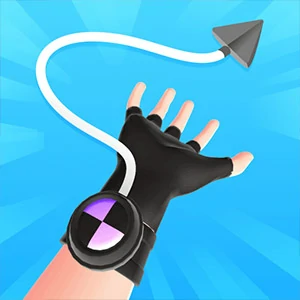
A miss is worth reading rather than repeating. When an action fails, exactly one of three things was wrong: the input, the aim, or the timing. Changing all three at once hides which one mattered. Change one, retest, and the next attempt becomes an answer. Ropeman 3D applies the same idea to a single shot: a rope fired while the line is open ends the scene in one attach, and a rope fired through the obstruction costs another try.
Handle one engagement before looking at the next. Hit Master Rush gives no steering, so the only thing worth racing is the threat nearest to crossing your line, and staying on a cleared target a beat too long is how a hit lands. Ropeman 3D wants the middle of the target named before you fire, since a first crack at the edge usually needs a second shot. Agent J closes the loop by asking you to act once and let the scene update before reading anything new.
Obstacles move on cycles, not on surprise. A repeating hazard can be read across one full pass instead of reacted to, which turns a timing problem into a looking problem. Watch the pattern once, line up with the opening, and commit as the gap arrives. Firing before the cycle comes round is the usual reason a clean run eats an attempt, not firing too slowly.
The exit is often more valuable than the next target. Agent J banks progress the moment you reach the marked safe position, so leaving mid-scene hands your next visit a stale read and a live threat. Ropeman 3D offers a revive that returns you to the failed scene rather than the top of the run, plus a skip for a scene whose route never opens. Most titles here also pause cleanly at a cleared boundary, which is why stopping there costs nothing.
This shelf suits a visitor who enjoys short, focused attempts and does not mind spending the first seconds of a round reading instead of acting. Someone after one long unbroken session will find the resets here more irritating than useful.