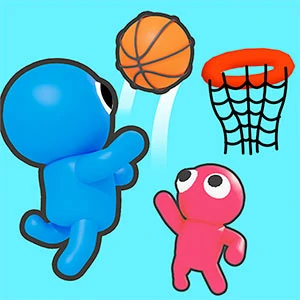
A tipped release means a covered side
The round is decided by made shots, so a speed run treats every possession as a unit of time: one clean release into the uncovered side, and the blocker has nothing to take from you. Blocks are the only real tax on the clock.
Shoot the side the defender just left
Clear the defender before you release
The fastest score is a two-move line: step away from the defender's coverage first, then shoot from that open side. Releasing from your first position hands the ball to the block, and a swatted attempt costs you the whole possession.
Treat one input as two separate bets
Movement and the shot share a single input (drag, swipe, or the on-screen directional control), so the run is two deliberate gestures, not one rushed one. Reposition with the first and release with the second, because squeezing both into a single swipe throws the ball into the defender.
Bank possessions as made shots, not attempts
The round counts baskets, so a possession ends well only when the ball is through the hoop. A blocked or tipped effort leaves the possession spent with nothing on the board, which is why the uncovered corner is worth one extra beat every time.
Spend the opening possession on a read
On the opening possession, watch where the defender stands before your first move, then head to the opposite side of the court. The opening goal is separation, not an immediate score. A clean window on the first pass sets the tempo for every possession after it.
A tipped release is a covered-side warning
You are reading the round right when the shot clears the defender with visible space. A block, a tipped release, or the defender drifting toward your strong side mid-move all mean the release came from the covered side, so the fix is positional, not a harder shot.
Re-make the gap after a double block
If the defender stops you twice in a row, slow down and rebuild the separation before releasing. Move away, take the extra beat to find the open side, and shoot from there. Repeating the same blocked angle costs another full possession each time.
Rising over the block in the lane
How do I control Basket Battle?
Moving and shooting use one input: drag, swipe, or the on-screen directional control. Reposition with one deliberate gesture, then release with a second clean one. Keeping them separate beats a rushed single swipe.
Is good aim enough to score?
Aim matters, but the release position matters more. A well-aimed shot from the covered side gets swatted, so the fastest route is clearing the defender first and shooting from the side they leave uncovered.
How much does a block cost in a run?
A block ends that possession and costs the whole unit of time it was worth, with no points on the board. Because of that, one extra beat of repositioning is cheaper than the possession a swatted shot wastes.
Where is the safe pause in a running round?
The natural break is between possessions, when the pressure resets and the next attack has not started. Stopping there banks the points already scored, while pausing mid-possession just leaves the gesture half-complete.
Build each possession around separation first and the shot second, in that order every time. The ball only leaves your hands cleanly when there is a gap between the release and the defender's reach, so the first gesture of a possession is repositioning and the second is the release. Treating them as one rushed motion usually puts the shot back off a hand, because the release happened from the spot the defender was already guarding.
Two blocks in a row are a signal to slow down rather than to aim harder. When the defender stops the same angle twice the read is already in their favour, so move away from the coverage and take the extra beat to see which side is genuinely open. Rebuilding the gap beats forcing a shot through a defender who is waiting for it.