The peak is the press point
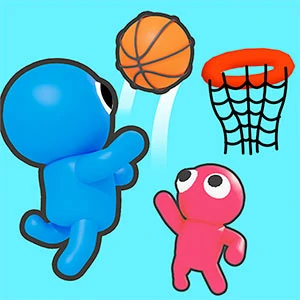
Bouncy Dunks is a placement game disguised as a basketball one: the ball bounces without help, the rim does not move, and the only input the game gives you is touch and drag to move. A quick run therefore comes from short, well-timed drags that put you under an arc you have already read.
One short drag lines up the next arc
Drag on the peak, not on the way down
The apex of a bounce is the moment the landing point becomes predictable, which makes it the cheapest moment to move. A drag started there finishes before the ball arrives; a drag started during the descent is already chasing a spot the ball is leaving.
One drag per bounce, no corrections
Stacking extra drags while the ball is airborne pushes you past the landing point and turns a clean position into an overshoot. Commit to a single movement per bounce and let the arc resolve before you adjust again.
Chain baskets rather than chasing misses
A scored basket flows into the next bounce immediately, so a scoring run builds its own momentum. Protect that chain by keeping the drags small and the positioning early, because the value of a run is the length of the sequence, not any single shot.
Hold the centre of the court
Sitting near the middle keeps every arc within reach of a short drag in either direction. Working the edges forces longer moves, and a long move takes enough time that the next bounce often lands before you get there.
Read the arc before you read the rim
The rim never changes position, so there is nothing to learn there. The variable is the arc, and its peak tells you both the distance and the direction. Read that first and the rim takes care of itself.
Where this sits against the aiming titles
Most basketball games on the shelf ask you to aim a shot. This one removes the shot and leaves positioning, which makes it a timing exercise: move well, and the scoring follows on its own.
Judging when to move on a bounce
What is the only input in this game?
Touch and drag to move, exactly as the on-screen prompt says. There is no shot button and no aim control to learn. The ball bounces by itself, so moving is the entire skill.
When is the best moment to drag?
At the top of the bounce. That is when the arc's landing point becomes readable, so a drag begun there gets you into place in time, while one started later leaves you trailing the ball.
Why does one drag sometimes ruin a good position?
Because a second drag while the ball is still in the air carries you past the landing spot. Keep to one movement per bounce: the arc resolves quickly and a correction almost always overshoots.
Does a missed bounce end the run?
It breaks the scoring chain rather than the session, so the useful response is to re-establish position for the next bounce instead of rushing the recovery. Longer chains, not faster reactions, are what improve a run.
Movement is a drag, so the length of the drag is a decision you make every time. A short drag nudges you a step along the court; a long one carries you across it and takes longer to stop. Because the ball keeps bouncing while you travel, the short drag is usually the one that arrives in time. Aim to finish the movement before the arc peaks again, so the next read happens from a settled position rather than from mid slide.
A round has a shape worth noticing. The opening bounces are about getting under the arc at all, and the useful goal there is simply to be standing in the landing area when the ball comes down. The middle stretch is where the chain builds, and the discipline that protects it is keeping every drag small. The point to ease off is when the arcs start arriving faster than you can reposition between them, because at that stage a rushed drag costs the chain you just built.
This is a good pick for a visitor who wants a calm positioning task with no aiming to learn, since the whole input set is one gesture. It is a poor fit for anyone looking for a shooting challenge or a score to chase through precision, because there is no shot control at all and the rim never moves. Judged against the other basketball titles nearby, it sits closer to a timing puzzle than to a sports game.
The most common slip is stacking a second drag while the ball is still in the air. It feels like a correction, but the ball is already committed to its landing point, so the extra movement carries you past it. If you notice yourself doing it, the fix is to let one bounce pass without touching the screen at all. Watching a full arc resolve tells you where the next one will land, and that read is worth more than any amount of mid air adjusting.