Count back three flips
A fast Roll The Block clear is mostly backward planning: you read the pose the goal needs, then tip the block there with the fewest orientation changes. Each roll costs one input and one footprint check, so the quickest run is the one that never has to reverse out of a lane.
Rewind the route from the goal pose
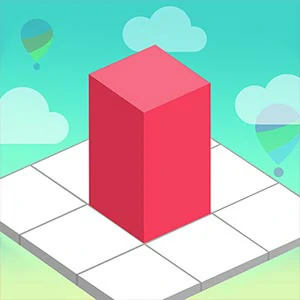
Standing upright on the target is the only finish
Reaching the destination tile is not enough - the level needs the block in the pose the goal demands, usually standing upright. Read that orientation before planning anything, because a block that arrives lying down forces a whole extra detour to stand it back up.
Tip through the nearest open two-cell strip
Changing between standing and lying needs the width of two cells, so the fastest runs hunt the nearest open strip that allows the flip. Route the early rolls through that strip, do the orientation change there, and keep the block aligned with the lane before you enter it.
Count back three flips from the finish
The finishing pose decides everything: work out where the block must sit one move before the end, then the move before that, and build the route from the goal back to the start. A route planned from the destination rarely needs a long correction at the finish line.
A hanging edge on a roll is the dead route
Sent a roll and the leading cell hangs over a gap - that path is dead, so read it as the route failing rather than the input failing. Undo the thought, not the move: check the footprint before sending and aim rolls only at cells that exist.
Wrong pose in a narrow lane costs a full detour
The block that tips over in a tight lane has no room to stand up again, so it has to roll backward to the nearest wide strip and back. That detour is the run's real time cost - the fix is doing orientation changes only where the board is wide, before entering any lane.
Back out to open ground and stand up before retrying
When the block ends the wrong way in a narrow section, retreat to the nearest open strip, stand it upright there, and re-approach the lane aligned. Re-read the goal's required pose and plan the last three flips again from the destination instead of improvising at the finish.
Rolling back out of a tight lane
What input sends the block one roll in Roll The Block?
Use the arrow keys on desktop, or swipe in a direction on touch; each input tips the block exactly one face forward. There are no diagonal or multi-cell moves, so line every roll up with empty cells in the direction you send it.
Why does the block land on the goal and still not finish?
The destination usually demands a specific final orientation, so a block that arrives lying down or sideways has not met the requirement. Plan the last few rolls backward from the pose the goal needs, and land the block standing exactly on the target tile.
What is the fastest route through a board?
One that changes orientation exactly once, in the widest open strip, and enters every narrow lane already aligned. Read the goal's required pose first, plan backward from it, and keep the footprint inside the board on every roll.
The block tipped the wrong way in a lane. Now what?
Roll it back to the nearest open strip and stand it up there before retrying the approach. Re-read the destination's required orientation and plan the last three flips backward from the goal - fighting the pose inside the lane is always slower than resetting in open ground.
Plan the route backward from the finish. Work out the pose the goal requires, then where the block must sit one roll before the end, and step back until you reach its start.
Orientation changes belong in wide ground, because standing the block up or laying it down needs two cells of width. Do the change in the nearest open strip before entering a lane.