Fire when the line clears
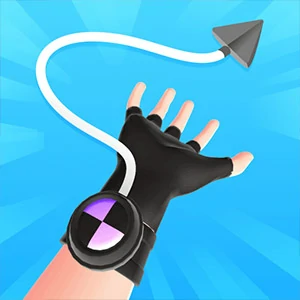
One clean attach per scene is the whole run: aim at the middle of the target, fire while the line is open, and let the swing finish the job. Everything else on screen either sets that shot up or cleans up after a miss.
Cast only when the path to the point is open
Pick the middle before the screen fires for you
Targets have a stable centre, and that is where a clean line starts. Naming the middle point before you aim keeps every scene on one attach, while a first crack at the edge usually costs a second shot.
Fire the moment the gap in the line opens
The route to the target is the only thing that gates your shot. Watch the obstacle cycle once, then press the moment the straight line clears. The shot that waits for the gap ends the scene in one rope.
Read the tap-to-aim prompt as your only input cue
The stage prints its input language on screen (tap to aim), so there is no control scheme to memorise. Spending the first seconds confirming the cue beats firing on a guess and losing the scene to a failed attach.
One release, timed to the swing, ends the attach
After the rope lands, the swing travels before the pull takes hold, so your job is a single release at the right moment. Early taps waste the shot; a timed release turns one attach into the finished scene.
Revive the close scene instead of replaying from zero
When the fail screen appears, Revive drops you back into the scene that just failed while Restart reloads it from the top. If the line was almost clear, reviving beats a full replay for time.
Skip the scene whose line will not open
Some scenes keep a route closed no matter how long you wait, and the Skip control exists for that moment. When two attempts both die on the same blocked line, skipping moves you along instead of burning more tries.
Why a slow start costs nothing
How do I control Ropeman 3D in a speed run?
Aim with the mouse or a finger drag, then use the click, tap, or on-screen action to fire the rope. Attach first, let the swing travel, and time the release as the line lines up. The input stays the same on every scene.
Where should I aim to keep the run at one shot per scene?
At the target's middle, always. A central attach pulls straight and finishes the scene in one rope, while an edge grab whips the object sideways and usually earns a second attempt at the same scene.
After a failed attach, is reviving or restarting faster?
Revive when the failed scene was close to done, since it returns you to that scene instead of replaying the whole stage. Restart is the cleaner choice when the line was wrong from the start and a fresh read will be quicker.
What counts as a clean run on Ropeman 3D?
One attach per scene with no failed attachment and no obstacle breaking the line. Each scene that clears on the first rope banks a little time, and every retry on the same scene spends it, so clean means single-shot.
The centre of a target is not just the safest place to attach, it is the read that keeps the scene honest. Aiming there means the pull travels straight and the object settles without swinging off its axis, so the scene either ends cleanly or tells you plainly that the line was not open yet. Grabbing an edge gives the rope something to whip around, and the whip is what turns a one-shot scene into a two-attempt one.
The scenes get their difficulty from the route, not from the target, so the read that matters happens before the rope ever leaves your hand. Watch the obstacle complete one full pass first. That single cycle tells you how long the line stays open and when it closes again, which is the only piece of timing the scene is asking you to learn. Firing on a guess means the next attempt starts from the same unknown.
Two failures on the same scene are a decision point rather than a reason to keep trying the same shot. If both attempts died on the same blocked line, the route is not going to open by waiting longer, and the scene is telling you it is not the one you are meant to solve with a straight attach. Moving past it costs less than the attempts you would spend confirming what you already suspect.