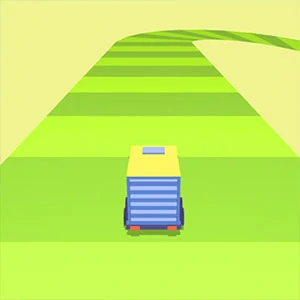
One clean move beats nudges
Every clean run of Race Masters Rush is a string of lane decisions, so the quickest lines come from deciding early and moving once. You read the hazard pattern, choose the side that stays open, and commit. The run earns its speed from settled driving, not from reacting at the last moment.
Hold one lane through the hazard cluster
One lane change beats a stream of nudges
Every unnecessary move adds seconds and drifts the vehicle toward the edge. Time a single committed change into the side that stays open, then hold it. A run built from one clean decision per pattern always beats a run built from a dozen small corrections.
Read the two patterns ahead, not the one beside you
By the time the current hazard is next to the vehicle, its solution is already fixed. Look a stage further and line up the overtake or hold before you reach it, so each section is handled with a choice you made in advance rather than a panic input.
A blocked lane is a wait, not a swerve
Forcing an overtake into an occupied lane trades one clean run for a certain hit. Hold position, let the blocker pass, and take the gap that opens behind it. The cheapest overtake is the one that costs you only the seconds you would have wasted anyway.
Bank your speed on the open straight
The straight is where the run spends its budget: settle there, line up the next decision, and enter the following section balanced. Coming out of a straight already mid-correction means the next hazard will arrive before you finish reading it.
A late swerve is the run's failure signal
When you are still correcting as the next obstacle arrives, you read the pattern too late - that is the moment the run starts costing hits. Use that signal to look one hazard earlier on the next pass instead of steering harder to catch up.
After a hit, reset to the center and re-read
Return the vehicle to the center lane, wait for the next pattern to show an opening, and make one committed move a moment earlier than last time. Steering harder to recover only feeds the same late-read loop; a clean reset is the faster way back.
Settle the vehicle before you read again
A car that is still drifting from the last input is hard to judge, because you cannot tell whether the position you are looking at is where you put it or where the drift left it. Release the controls for a moment on the open stretch, let the vehicle sit in its lane, and read the next pattern from a stable picture. The move you take from a settled car is almost always the right one.
Commit before the hazard reaches you, not as it arrives
The cost of a lane decision is decided by when you make it, not by how large it is. A change made two patterns early costs nothing and gives the car time to settle, while the same change made as the obstacle pulls alongside is already a panic input. If you find yourself steering at the last moment, the fix is not a harder steer, it is reading one pattern further ahead on the next attempt.
An empty side is worth what the seconds behind it cost
A clear lane is not automatically the fast one, because it can look open while the run still has to wait there for a gap behind a blocker. Weigh the two costs against each other: the seconds spent holding position, and the risk of forcing a pass into a lane that is not ready. The calm choice is usually the one that keeps the car balanced for the section after this one.
When the gap behind the blocker opens
Which steering input does Race Masters Rush expect?
Use the steering method shown for your device - keys, mouse drag, or one-finger touch - and make each lane change one deliberate input. Release between moves so the vehicle settles before the next hazard arrives.
Is the middle lane always the safe pick?
It is the best neutral spot while you read the pattern, but not always the fastest route. Move early the moment a clearer side opens instead of staying centered out of habit, since a committed move timed early beats a late one from a perfect start position.
When should I overtake to save the most time?
Overtake only when the neighbouring lane is visibly empty and you can pass the blocker before the next hazard. A single decisive move there costs less than three hesitant ones, and completing the pass early means the next section starts from a clean position.
How do I get back to speed fastest after a hit?
Stop steering toward the pack and return to the center lane, then read the next pattern a beat earlier than before. One committed move at the right moment restores the run faster than continuous small corrections while you chase.